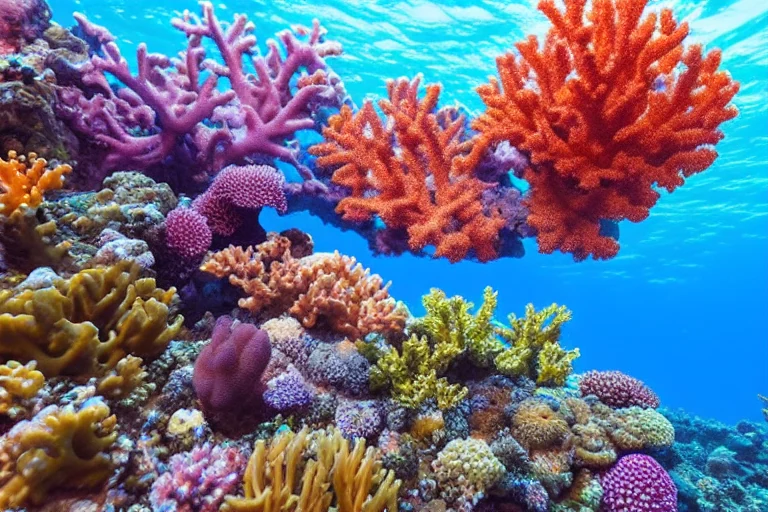
Introduction to Ocean Acidification
Ocean acidification is a result of increased carbon dioxide levels in the atmosphere, which dissolve into seawater and form carbonic acid, lowering the pH and making the ocean more acidic. This process primarily affects the availability of carbonate ions, which are crucial for the formation of shells and skeletons in many marine organisms [1][4].
Mechanisms of Ocean Acidification
Ocean acidification occurs when carbon dioxide from the atmosphere dissolves in seawater, forming carbonic acid. This leads to a decrease in pH and an increase in hydrogen ions, making the ocean more acidic. The process also reduces the concentration of carbonate ions, which are essential for the formation of calcium carbonate structures in marine organisms [1][4].
Impact on Marine Species
Ocean acidification affects various marine species, including shellfish, corals, and plankton. For example, coccolithophores, a type of algae, grow more slowly and build flimsier skeletons under increasingly acidic conditions. This can disrupt the marine food web and potentially lead to the extinction of some species [5][7].
Evidence and Case Studies
Research has shown that ocean acidification is affecting marine ecosystems globally. For instance, the Arctic Ocean is experiencing acidification due to increased CO2 absorption, which poses a threat to marine life and human societies that depend on them [3][8]. The decrease in pH levels can lead to the dissolution of shells and skeletons, affecting the overall health of the marine ecosystem [3][8].
Significance for Conservation
Understanding the practical significance of ocean acidification is crucial for conservation efforts. The impact on marine species and ecosystems can have far-reaching consequences, including the disruption of food chains and the loss of biodiversity. Addressing ocean acidification requires global cooperation and the reduction of carbon emissions to mitigate its effects [4][8].
Key Takeaways
- Ocean acidification is caused by increased CO2 levels in the atmosphere, leading to a decrease in pH and an increase in acidity [1][4].
- The process primarily affects the availability of carbonate ions, which are essential for the formation of shells and skeletons in marine organisms [1][4].
- Ocean acidification can disrupt the marine food web and potentially lead to the extinction of some species [5][7].
- The Arctic Ocean is experiencing acidification, posing a threat to marine life and human societies [3][8].
- Addressing ocean acidification requires global cooperation and the reduction of carbon emissions [4][8].
FAQ
What causes ocean acidification?
Ocean acidification is caused by increased carbon dioxide levels in the atmosphere, which dissolve into seawater and form carbonic acid, lowering the pH and making the ocean more acidic [1][4].
How does ocean acidification affect marine life?
Ocean acidification affects various marine species, including shellfish, corals, and plankton. For example, coccolithophores, a type of algae, grow more slowly and build flimsier skeletons under increasingly acidic conditions [5][7].
What are the consequences of ocean acidification for the marine ecosystem?
Ocean acidification can disrupt the marine food web and potentially lead to the extinction of some species. Additionally, the decrease in carbonate ions can make it difficult for organisms to form and maintain their shells and skeletons [1][4][5][7].
What can be done to address ocean acidification?
Addressing ocean acidification requires global cooperation and the reduction of carbon emissions to mitigate its effects [8].
Why is understanding the practical significance of ocean acidification important for conservation efforts?
Understanding the practical significance of ocean acidification is crucial for conservation efforts. The impact on marine species and ecosystems can have far-reaching consequences, including the disruption of food chains and the loss of biodiversity [4][8].
Conclusion
Ocean acidification is a significant global issue that affects marine life and ecosystems. By understanding its causes and impacts, we can work towards mitigating its effects and protecting our oceans for future generations [6][8].