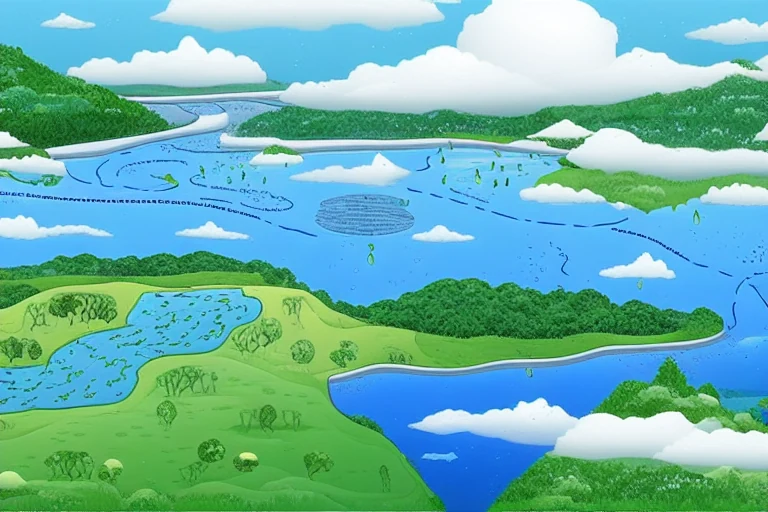
The water cycle is a fascinating and essential process that continuously moves water across the Earth. It involves various stages, including evaporation, condensation, precipitation, and collection. Understanding the water cycle helps us appreciate the importance of water in our daily lives and the impact of human activities on this natural system. Here’s a detailed look at the water cycle and its significance for the environment.
Stages of the Water Cycle
1. **Evaporation**: Water from oceans, lakes, rivers, and other bodies of water heats up by the sun and turns into vapor. Plants also release water vapor through a process called transpiration.
2. **Condensation**: As the water vapor rises, it cools and turns back into liquid droplets, forming clouds. These droplets combine and grow larger, eventually leading to precipitation.
3. **Precipitation**: Rain, snow, sleet, or hail falls from the clouds and returns to the Earth's surface. This water can either infiltrate the ground or run off into rivers, lakes, and oceans.
4. **Collection**: Water collects in various bodies of water, such as rivers, lakes, and oceans, and the cycle starts over again.
Human Impact on the Water Cycle
Human activities significantly affect the water cycle. For example, deforestation reduces the amount of water that can be transpired into the atmosphere, leading to less rainfall in affected areas. Additionally, urbanization and agriculture can alter the natural flow of water, leading to increased runoff and decreased groundwater recharge.
Educational Resources
To learn more about the water cycle, you can explore interactive diagrams and animations. The U.S. Geological Survey (USGS) offers an advanced interactive water cycle diagram for kids, which can be accessed through their website. These resources provide a visual and engaging way to understand the complex process of the water cycle.
Conclusion
The water cycle is a critical component of our environment, influencing weather patterns, supporting ecosystems, and providing essential resources for human life. By understanding and protecting this natural process, we can ensure a sustainable future for our planet.