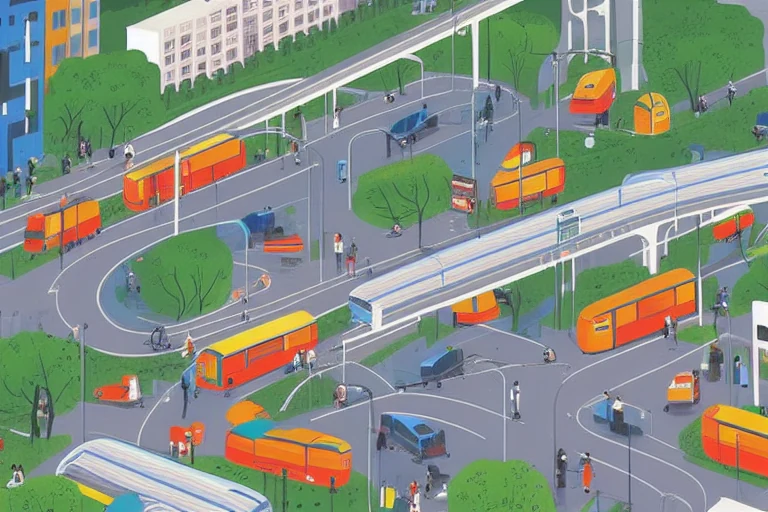
Introduction to Public Transportation
Public transportation systems have evolved significantly over time, driven by technological advancements, economic factors, and social needs. This section will explore the historical development of transportation systems and their current state. [7]
Technological Advancements in Public Transportation
Technological advancements, such as the introduction of electric and autonomous vehicles, have transformed public transportation systems. Smart technologies have also been integrated to enhance efficiency and user experience. For instance, the U.S. EPA emphasizes the importance of smart growth and transportation, highlighting how integrated planning can create multi-modal opportunities and reduce pollution (Source 1). [4]
Economic Factors Influencing Public Transportation
Economic factors, such as funding, infrastructure development, and the impact of urbanization, have played a significant role in the development and expansion of public transportation systems in different regions. The Energy Kids timeline from the U.S. Energy Information Administration (EIA) provides a historical perspective on transportation, from the early days of horse-drawn carts to the advent of automobiles and electric cars (Source 2). [4]
Challenges and Solutions in Public Transportation
Public transportation systems face various challenges, including maintenance, safety, and environmental concerns. For example, traffic congestion and parking difficulties are significant issues in large urban areas, as highlighted by the TransportGeography.org (Source 6). Solutions include the implementation of Mobility as a Service (MaaS) and the use of smart technologies to improve efficiency and reduce costs. [4]
Social and Cultural Factors Impacting Public Transportation
Social and cultural factors, such as urban planning, demographic changes, and community preferences, have influenced the design and usage of public transportation systems in various cities. The evolution of transportation services, such as the introduction of MaaS, reflects the changing needs of society (Source 4). [6]
Environmental Impacts and Sustainable Solutions
Public transportation systems have significant environmental impacts, and this section will discuss how these systems have evolved to address environmental concerns, including the use of renewable energy and the promotion of sustainable practices. The U.S. EPA's focus on reducing greenhouse gas emissions through transportation electrification and the U.S. National Blueprint for Transportation Decarbonization are examples of efforts to address these concerns (Source 1). [1]
Key Takeaways
- Technological advancements, such as electric and autonomous vehicles, have transformed public transportation systems.
- Economic factors, including funding and urbanization, significantly influence the development and expansion of public transportation. [7]
- Challenges in public transportation include maintenance, safety, and environmental concerns, which require innovative solutions. [8]
- Social and cultural factors, such as urban planning and community preferences, shape the design and usage of public transportation systems. [6]
- Public transportation systems are evolving to address environmental concerns through the use of renewable energy and sustainable practices. [8]
FAQ
- **What are the key technological advancements that have shaped the evolution of public transportation systems?**
Key technological advancements include the introduction of electric and autonomous vehicles, and the integration of smart technologies. [4]
- **How have economic factors influenced the development and expansion of public transportation systems in different regions?** [8]
Economic factors, such as funding, infrastructure development, and the impact of urbanization, have significantly influenced the development and expansion of public transportation systems. [8]
- **What are the main challenges and solutions in the implementation and maintenance of public transportation systems?** [4]
Challenges include maintenance, safety, and environmental concerns, which can be addressed through the implementation of Mobility as a Service (MaaS) and the use of smart technologies. [4]
- **How have social and cultural factors impacted the design and usage of public transportation systems in various cities?** [6]
Social and cultural factors, such as urban planning and community preferences, have influenced the design and usage of public transportation systems. [6]
- **What are the environmental impacts of public transportation systems and how have these systems evolved to address environmental concerns?** [8]
Public transportation systems have significant environmental impacts, and they are evolving to address these concerns through the use of renewable energy and sustainable practices. [8]
Conclusion
Public transportation systems have evolved significantly over time, driven by technological advancements, economic factors, and social needs. While challenges remain, innovative solutions and a focus on sustainability are paving the way for a more efficient and environmentally friendly future. [8]