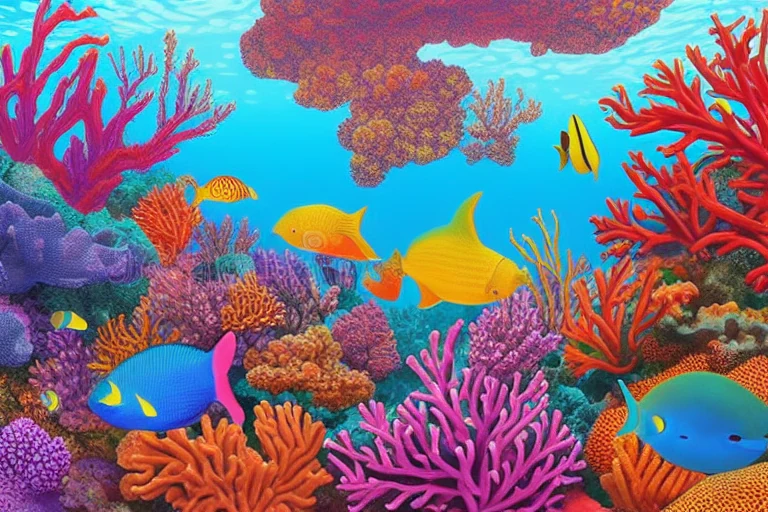
Introduction to Coral Reefs
Coral reefs are complex ecosystems that support a vast array of marine life. They are built from the calcium carbonate skeletons of coral polyps and are found in shallow, sunlit waters. Coral reefs are often referred to as the 'rainforests of the sea' due to their biodiversity [3][5]. They play a crucial role in protecting coastlines from erosion and storm surges, and they are economically and culturally significant for coastal communities [7][8].
Components and Structures of Coral Reefs
Coral reefs are composed of various types of corals, algae, and other marine organisms. The primary structures include the reef crest, which is the highest point and most exposed to waves, the seaward slope, and the lagoon. These structures provide habitats for a wide range of species, from fish and invertebrates to larger marine mammals [8].
Adaptations of Corals to Marine Environments
Corals have developed several adaptations to survive in their marine environment. They form symbiotic relationships with algae, which provide them with nutrients through photosynthesis. Additionally, some corals can undergo a process called 'assisted evolution' to enhance their thermal tolerance, allowing them to better withstand rising ocean temperatures and bleaching events [6].
Role of Coral Reefs in Marine Biodiversity
Coral reefs are home to up to 25% of all ocean species, making them one of the most biodiverse ecosystems on the planet. They support a wide range of marine life and play a crucial role in maintaining the balance of marine ecosystems, including the health of coastal communities [6][8].
Examples of Coral Species and Their Adaptations
Examples of specific coral species include the Elkhorn coral (Acropora palmata), which is responsible for creating the reef crest and is under threat due to various stressors. Another example is the stromatolites, which are ancient reef-building organisms that can be found in stressed marine environments [2].
Importance of Coral Reefs for Human Societies and the Environment
Coral reefs are vital for human societies and the environment. They provide food, shelter, and nursery grounds for countless marine species, support fisheries, and draw millions of visitors each year. They also act as natural breakwaters, protecting coastal communities from storms and wave damage. Coral reefs are under threat from various pressures, including rising ocean temperatures, ocean acidification, and pollution [7][8].
Key Takeaways
- Coral reefs are complex ecosystems that support a vast array of marine life.
- Corals form symbiotic relationships with algae to provide nutrients through photosynthesis.
- Coral reefs play a crucial role in protecting coastlines from erosion and storm surges.
- Coral reefs are home to up to 25% of all ocean species, making them one of the most biodiverse ecosystems on the planet [8].
- Coral reefs are under threat from various pressures, including rising ocean temperatures, ocean acidification, and pollution [7][8].
FAQ
- **What are the primary components and structures of coral reefs?** Coral reefs are built from the calcium carbonate skeletons of coral polyps and are found in shallow, sunlit waters. They are composed of various types of corals, algae, and other marine organisms. The primary structures include the reef crest, the seaward slope, and the lagoon [3].
- **How do corals adapt to their marine environment to survive?** Corals form symbiotic relationships with algae to provide nutrients through photosynthesis. Some corals can undergo a process called 'assisted evolution' to enhance their thermal tolerance, allowing them to better withstand rising ocean temperatures and bleaching events [6].
- **What is the role of coral reefs in maintaining marine biodiversity?** Coral reefs are home to up to 25% of all ocean species, making them one of the most biodiverse ecosystems on the planet. They support a wide range of marine life and play a crucial role in maintaining the balance of marine ecosystems, including the health of coastal communities [6][8].
- **Can you provide examples of specific coral species and their unique adaptations?** Examples include the Elkhorn coral (Acropora palmata), which is responsible for creating the reef crest, and stromatolites, which are ancient reef-building organisms that can be found in stressed marine environments [2].
- **Why are coral reefs important for human societies and the environment?** Coral reefs provide food, shelter, and nursery grounds for countless marine species, support fisheries, and draw millions of visitors each year. They also act as natural breakwaters, protecting coastal communities from storms and wave damage. Coral reefs are under threat from various pressures, including rising ocean temperatures, ocean acidification, and pollution [7][8].
Conclusion
Coral reefs are essential for the health of our oceans and the well-being of coastal communities. Understanding their complex structures, adaptations, and roles in marine biodiversity is crucial for their conservation and the protection of the environment [6][8].