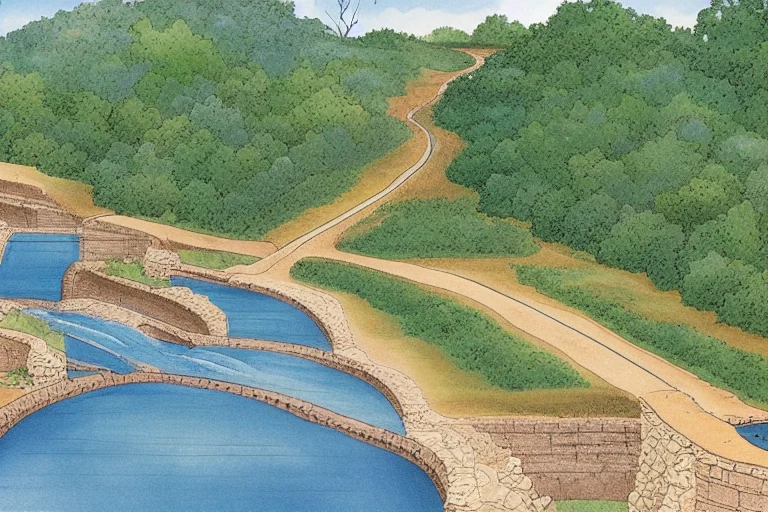
Introduction to Ancient Water Management
Ancient civilizations developed sophisticated water supply systems using natural resources and innovative engineering techniques. The Tehuacán Valley in Mexico features one of the oldest continually used water management systems in the world, showcasing the Purrón Dam, the largest pre-Hispanic earthen dam in the Americas. Archaeologists use geoarchaeological approaches and radiocarbon dating to study these systems, highlighting the challenges in documenting and preserving them. [1]
Key Mechanisms in Ancient Water Supply Systems
Mechanisms such as earthen dams, irrigation canals, and aqueducts were used in ancient water supply systems. The Tehuacán Valley, Minoan civilization, and ancient Greece provide examples of these systems. These mechanisms utilized gravity, natural resources, and innovative engineering techniques to manage water effectively. [3]
Archaeological Evidence and Research Methods
Archaeologists use geoarchaeological approaches, radiocarbon dating, and the analysis of canal samples to study ancient water supply systems. The Purrón Dam in the Tehuacán Valley and the indoor plumbing systems in ancient Greece are examples of systems studied through these methods. Challenges in documenting and preserving these systems are also discussed. [1]
Examples of Ancient Water Supply Systems
Examples of ancient water supply systems include the Purrón Dam in the Tehuacán Valley, the indoor plumbing systems in ancient Greece, and the aqueducts in the Western Mediterranean. These systems showcase the diversity and ingenuity of ancient water management techniques. [7]
Practical Significance of Ancient Water Supply Systems
Ancient water supply systems played a crucial role in supporting agriculture, urban development, and public health. The Tehuacán Valley's water management systems, for instance, supported early forms of domesticated maize, while the indoor plumbing systems in ancient Greece provided efficient water distribution. These systems remain relevant for modern water management. [8]
Key Takeaways
- Ancient civilizations developed sophisticated water supply systems using natural resources and innovative engineering techniques. [8]
- The Tehuacán Valley in Mexico features one of the oldest continually used water management systems in the world, with the Purrón Dam being the largest pre-Hispanic earthen dam in the Americas. [1]
- Archaeologists use geoarchaeological approaches and radiocarbon dating to study ancient water supply systems. [1]
- Ancient water supply systems played a crucial role in supporting agriculture, urban development, and public health. [8]
FAQ
- **What are some key mechanisms used in ancient water supply systems?**
Earthen dams, irrigation canals, and aqueducts were used in ancient water supply systems. [3]
- **How do archaeologists study ancient water supply systems?**
Archaeologists use geoarchaeological approaches, radiocarbon dating, and the analysis of canal samples to study ancient water supply systems. [1]
- **Can you provide examples of ancient water supply systems from different civilizations?**
Examples include the Purrón Dam in the Tehuacán Valley, the indoor plumbing systems in ancient Greece, and the aqueducts in the Western Mediterranean. [7]
- **What was the practical significance of ancient water supply systems in their respective societies?**
Ancient water supply systems supported agriculture, urban development, and public health, and remain relevant for modern water management. [8]
Conclusion
Ancient water supply systems were crucial for the development and sustainability of civilizations. By studying these systems, we can gain valuable insights into the engineering and social practices of ancient societies and apply these lessons to modern water management challenges. [8]