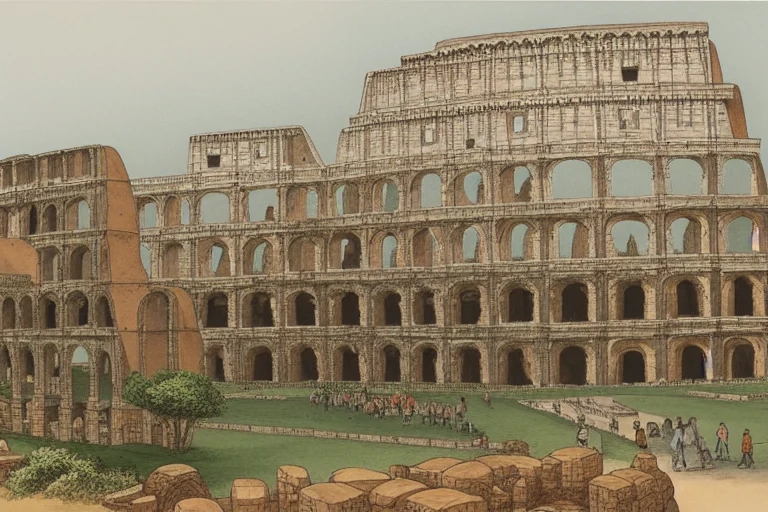
Introduction to Ancient Roman Engineering and Architecture
Ancient Roman engineering and architecture stand as a testament to the ingenuity and practicality of the Roman civilization. This section explores the key engineering achievements, the use of arches and vaults, and the evidence supporting these innovations. It also highlights significant architectural marvels and the practical significance of Roman engineering in daily life. [1][2]
Key Engineering Achievements
Ancient Roman engineering and architecture were characterized by practicality and innovation, utilizing new materials like concrete and advanced construction techniques. The Romans borrowed and refined techniques from the Greeks, Etruscans, Egyptians, and Babylonians. They constructed massive bridges, aqueducts, and roads, some of which still stand today. For example, the aqueduct of Segovia in central Spain, built between the late first century and early second century A.D., is a testament to Roman engineering. The Romans also perfected the use of concrete, which allowed for the construction of durable and efficient infrastructure. [1][2]
Use of Arches and Vaults
Arches and vaults were crucial elements in Roman architecture, allowing for the construction of large and complex structures. These elements were used to create strong and stable buildings, such as the Colosseum and the Pantheon. The Romans refined the use of arches and vaults, making them essential in their architectural designs. [1][2]
Evidence of Architectural Innovations
Evidence of Roman architectural innovations can be found in primary sources such as Vitruvius' 'De Architectura' and historical accounts from ancient Roman historians. Vitruvius, a first-century B.C. Roman engineer, architect, and theorist, provided invaluable insights into Roman architectural principles. He emphasized the importance of utility, or utilitas, in Roman thinking. Historical accounts from ancient Roman historians, such as those by Tacitus and Pliny the Elder, also highlight the practical and strategic brilliance behind Roman infrastructure. [1][2][3]
Significant Architectural Marvels
Examples of significant ancient Roman architectural marvels include the Colosseum, the Pantheon, and the Roman Forum. The Colosseum, built in the first century A.D., is a prime example of Roman engineering and architectural techniques. The Pantheon, also from the first century A.D., showcases the advanced engineering and architectural skills of the Roman Empire. The Roman Forum, the center of Roman public life, exemplifies the practical significance of Roman engineering in daily life. [1][2][3]
Practical Significance in Daily Life
Roman engineering had a profound impact on daily life, contributing to military, urban planning, and public services. The construction of roads, bridges, and aqueducts facilitated the movement of armies and the transport of goods. The aqueducts provided a steady supply of water to cities, supporting public baths and sanitation systems. Roman engineering also contributed to the functioning and growth of the empire, making it a cornerstone of Roman civilization. [1][2][3]
Key Takeaways
- Ancient Roman engineering and architecture were characterized by practicality and innovation, utilizing new materials like concrete and advanced construction techniques. [1][2]
- Arches and vaults were essential in Roman architecture, enabling the construction of large and complex structures. [1][2]
- Roman engineering was supported by primary sources such as Vitruvius' 'De Architectura' and historical accounts from ancient Roman historians. [1][2][3]
- Significant architectural marvels like the Colosseum and the Pantheon exemplify the advanced engineering and architectural techniques of the Roman Empire. [1][2][3]
- Roman engineering had a profound impact on daily life, contributing to military, urban planning, and public services. [1][2][3]
FAQ
- **What were the key engineering achievements of ancient Roman architecture?**
- Ancient Roman engineering and architecture were characterized by practicality and innovation, utilizing new materials like concrete and advanced construction techniques. They constructed massive bridges, aqueducts, and roads, some of which still stand today. [1][2]
- **How did ancient Romans use arches and vaults in their architectural designs?**
- Arches and vaults were crucial elements in Roman architecture, allowing for the construction of large and complex structures. These elements were used to create strong and stable buildings, such as the Colosseum and the Pantheon. [1][2]
- **What evidence do we have to support the architectural innovations of ancient Rome?**
- Evidence of Roman architectural innovations can be found in primary sources such as Vitruvius' 'De Architectura' and historical accounts from ancient Roman historians. Vitruvius, a first-century B.C. Roman engineer, architect, and theorist, provided invaluable insights into Roman architectural principles. [1][2][3]
- **Can you provide examples of significant ancient Roman architectural marvels?**
- Examples of significant ancient Roman architectural marvels include the Colosseum, the Pantheon, and the Roman Forum. The Colosseum, built in the first century A.D., is a prime example of Roman engineering and architectural techniques. The Pantheon, also from the first century A.D., showcases the advanced engineering and architectural skills of the Roman Empire. The Roman Forum, the center of Roman public life, exemplifies the practical significance of Roman engineering in daily life. [1][2][3]
- **What was the practical significance of ancient Roman engineering in daily life?**
- Roman engineering had a profound impact on daily life, contributing to military, urban planning, and public services. The construction of roads, bridges, and aqueducts facilitated the movement of armies and the transport of goods. The aqueducts provided a steady supply of water to cities, supporting public baths and sanitation systems. Roman engineering also contributed to the functioning and growth of the empire, making it a cornerstone of Roman civilization. [1][2][3]
Conclusion
Ancient Roman engineering and architecture were a testament to the ingenuity and practicality of the Roman civilization. Through the use of arches, vaults, and advanced construction techniques, the Romans created enduring structures that continue to inspire and inform modern engineering. The legacy of Roman engineering can still be seen today, with many of their structures still standing and influencing contemporary building practices. [1][2][3]