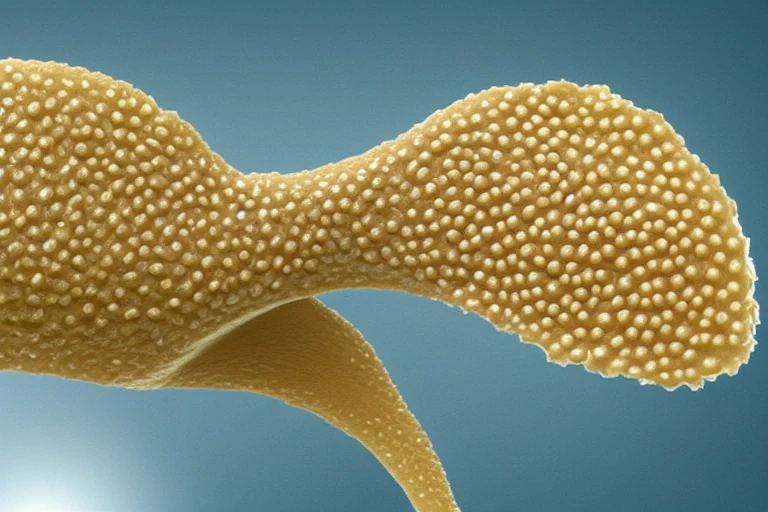
Introduction to Taste Buds
Taste buds are sensory organs located on the tongue and other parts of the mouth. They contain taste receptor cells that detect five primary tastes: sweet, sour, salty, bitter, and umami. These cells send signals to the brain via nerve fibers, allowing us to perceive and enjoy various tastes. [7]
Types of Taste Buds and Their Detection Mechanisms
Taste buds are found in different types of papillae on the tongue, each with its own specific taste receptors. The taste receptor cells have microvilli containing receptor proteins that detect chemicals in food and generate nerve signals. The detection mechanisms vary for different tastes, with some involving G-protein-coupled receptors and others involving ion channels. [1]
Brain Processing of Taste Signals
The brain processes taste signals from taste buds through the seventh, ninth, and tenth cranial nerves. These signals are integrated with other sensory inputs, such as smell, to create the complex perception of flavor. The brain's gustatory cortex plays a crucial role in recognizing and interpreting these signals. [7]
Key Scientific Studies and Their Contributions
Recent studies have advanced our understanding of taste bud detection and processing. Key findings include the identification of specific taste receptor proteins and the mechanisms of taste transduction. These studies have contributed significantly to the development of flavor science and food technology. [1]
Debates and Competing Theories
There are ongoing debates in the scientific community regarding the mechanisms of flavor detection and processing. Some theories suggest that taste buds are more complex than previously thought, while others propose alternative models. These debates continue to drive research and innovation in the field. [1]
Impact on Flavor Science and Food Technology
The study of taste buds and flavor detection has contributed to the development of flavor science and food technology. Understanding how taste buds work has led to the creation of more palatable and nutritious foods, as well as the development of artificial sweeteners and flavor enhancers. [4]
Key Takeaways
- Taste buds are sensory organs that detect five primary tastes: sweet, sour, salty, bitter, and umami.
- Taste receptor cells in taste buds have microvilli containing receptor proteins that detect chemicals in food.
- The brain processes taste signals through the seventh, ninth, and tenth cranial nerves, integrating them with other sensory inputs. [7]
- Key scientific studies have advanced our understanding of taste detection and processing, contributing to flavor science and food technology. [4]
- Ongoing debates in the scientific community continue to drive research and innovation in the field of taste and flavor. [4]
FAQ
- **What are taste buds and how do they work?** Taste buds are sensory organs that detect five primary tastes: sweet, sour, salty, bitter, and umami. They contain taste receptor cells that send signals to the brain via nerve fibers. [3]
- **How many taste buds do humans have?** The average person has between 2,000 and 4,000 taste buds, which can detect five primary tastes. [3]
- **What are the five primary tastes detected by taste buds?** The five primary tastes are sweet, sour, salty, bitter, and umami. [7]
- **How does the brain process taste signals?** The brain processes taste signals through the seventh, ninth, and tenth cranial nerves, integrating them with other sensory inputs. [3]
- **What are some key scientific studies that have advanced our understanding of taste detection and processing?** Key studies include the identification of specific taste receptor proteins and the mechanisms of taste transduction, contributing to flavor science and food technology. [1]